Sterling Behavior Font Review
There I was, staring at a blank brand board for a new artisanal coffee shop. The client wanted something that felt warm, personal, and a little unexpected. I reached for my usual go-to fonts—clean sans serifs and minimalist scripts—but nothing quite fit. That’s when I pulled up Sterling Behavior. It wasn’t the first font I tried, but it quickly became the one that made me pause and think about what the brand could really be.
Sterling Behavior for Brand Identity and Logo Design
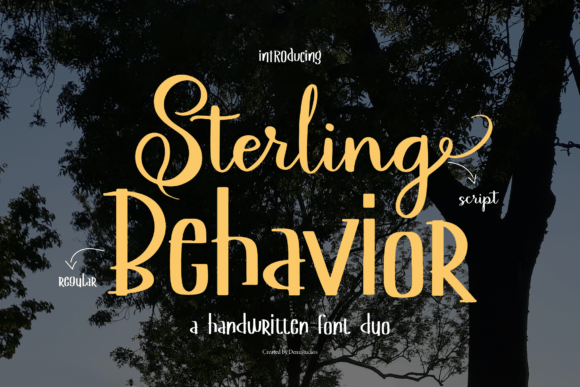
Sterling Behavior is a handwritten font duo that combines two styles: a smooth, elegant script and a bold, playful sans-serif. As a Script Handwritten font, it brings a sense of authenticity and character to any design. In logo design, it works well when you want to convey approachability and creativity without being too informal.
I tested it on a logo concept with a coffee cup icon and a name that needed to feel both modern and handcrafted. The script style added a softness that balanced the bold sans-serif, making the whole thing feel cohesive. It wasn’t just about aesthetics—it helped define the personality of the brand in a way that more rigid fonts couldn’t.
Sterling Behavior for Packaging and Product Labels
When I moved to packaging mockups, the font really started to shine. On a coffee bag with a minimalist layout, the script gave the product a handmade feel, while the sans-serif worked well for subheadings and ingredient lists. It’s not the best choice for long blocks of text, but as a headline or accent font, it adds visual interest and keeps the design from feeling too static.
One thing I noticed was how it handled different sizes. At larger scales, like on a shelf label, it maintained its clarity and charm. But in smaller sizes, especially on product tags, the script became a bit harder to read. That’s something to keep in mind if you’re using it for detailed product information.
Sterling Behavior for Web Design and Social Media Graphics
On a website header, Sterling Behavior brought a refreshing contrast to a clean, modern layout. The script paired well with a neutral color palette, adding a touch of warmth without overwhelming the design. For social media graphics, it worked great for headlines and callouts, especially in posts that aimed to feel personal and engaging.
I also used it in an Instagram carousel post for a local bakery. The font helped create a friendly, inviting tone that aligned with the brand’s image. It wasn’t the most readable in all contexts, but when used strategically, it added a unique flair that stood out from more generic fonts.
Sterling Behavior for Business Cards and Print Materials
Business cards are a great test for any font, and Sterling Behavior performed well in this context. The script style looked good on a name and title, giving the card a personal touch. The bold sans-serif worked well for contact details, offering a clear contrast and helping with legibility.
One challenge I faced was ensuring the font had enough weight for small print. If the text was too light, it became hard to read at a glance. But with proper spacing and sizing, it still managed to feel professional and stylish. It’s definitely not the best choice for a formal business setting, but for a creative or boutique brand, it’s a solid option.
Sterling Behavior for Editorial and Commercial Design Assets
In editorial design, like a magazine spread or a flyer, Sterling Behavior can be a powerful tool. Its dual styles allow for flexibility in hierarchy, making it easy to create visual flow without relying on multiple typefaces. The script adds a human element, while the sans-serif provides structure and clarity.
For commercial design assets, such as templates or marketing materials, the font can be a useful addition. It’s ideal for projects that need a custom, handcrafted look. However, it’s important to consider the target audience. If the brand is targeting a more traditional or corporate market, Sterling Behavior might not be the best fit. But for a creative studio or a lifestyle brand, it can add a distinct identity.